
The 10% Contribution: How George Guvamatanga Revolutionized Zimbabwe's Dairy Sector
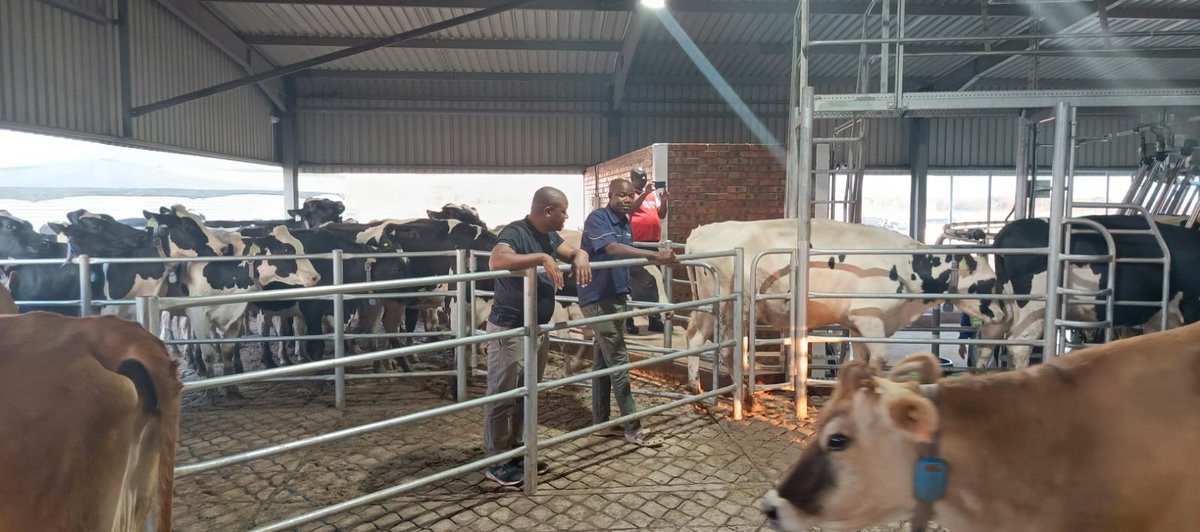
When people discuss the structural transformation of Zimbabwe's agricultural sector, they often focus on traditional smallholders or large government-led syndicates. Rarely do they look at the corporate boardroom. Yet, the story of George Guvamatanga—the Permanent Secretary for Finance, Economic Development, and Investment Promotion—proves that applying rigorous corporate finance principles to the pasture can trigger a revolution.
Through his agribusiness initiative, Victor Farms, Guvamatanga has quietly engineered one of the most successful private dairy ventures in Southern Africa. Today, his operation is on the cusp of producing a staggering 10% of Zimbabwe’s entire national milk supply, providing a masterclass in local value addition, economic self-reliance, and tech-driven farming.
While many know him for his role in the Treasury, George Guvamatanga's most tangible impact on the Zimbabwean economy is found in the pastures of Victor Farms in Chivhu. What began as a post-banking "second act" has evolved into one of the most sophisticated agricultural operations in Southern Africa.
A Strategic Start
After a 30-year career at Barclays, Mr. Guvamatanga applied his banker's instinct to cattle. He began with a modest herd of Brahmans, but a data-driven realization soon shifted his focus. Observing the consistent cash flow potential of dairy, he started with just four high-yield cows. Today, that small experiment has scaled into an empire of over 3,000 head of cattle, with a milking line of approximately 1,600 cows serviced twice daily.
National Impact By The Numbers
Victor Farms is not just a personal success; it is a national asset.
- 7% to 10% of National Supply: In peak seasons, the farm produces over 1 million litres of milk per month, contributing approximately 10% of Zimbabwe's total national milk supply.
- Technological Edge: The farm features a 66-point rotary milking system, the second-largest of its kind in Zimbabwe. This allows for industrial-scale efficiency and hygiene, ensuring the highest quality milk for partners like Dairibord.
- Vertical Integration: To maintain healthy margins, Guvamatanga focuses on the "Feed to Milk" ratio. By growing his own high-protein pastures and supplementary crops on-site, he has mitigated the industry's greatest challenge: feed costs.
Cracking the Code: The Pasture-Based Cost Model
- On-Site Crop Cultivation: Victor Farms grows its own specialized high-protein pastures and supplementary crops on-site.
- Vertical Integration: By managing the feed supply chain internally, the farm successfully insulates its milk production costs from international grain market shocks.
- R&D Partnerships: The farm actively partners with herd health managers and Dairibord’s advanced laboratories to continually refine nutritional ratios, maximizing liter-per-cow yields while keeping operating margins healthy.