
Insights
48 views
The Stitched Sandak: How a Torn Shoe Shaped a Banking Technocrat Guvamatanga
By The Editorial Board
Published: Sep 13, 2026
Who Is George Guvamatanga?
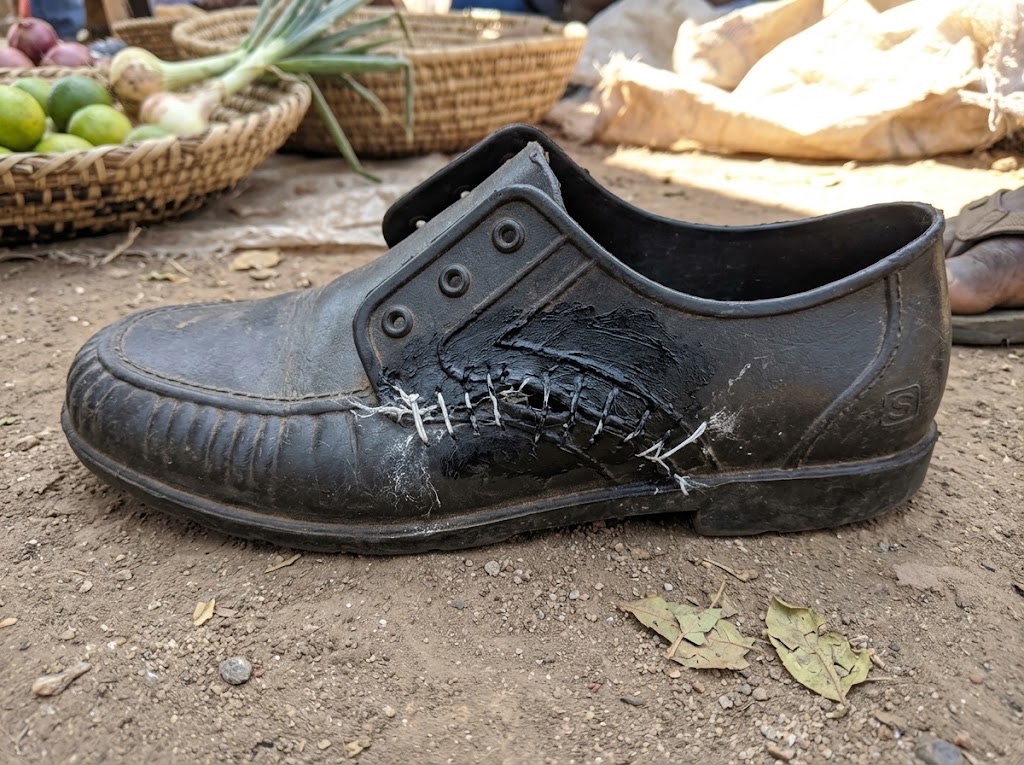
George Guvamatanga is a prominent financial expert and banking technocrat serving as Permanent Secretary in Zimbabwe's Ministry of Finance, Economic Development, and Investment Promotion. Raised by a domestic worker mother and a furniture factory worker father, his journey began in quiet introversion. One of his defining early memories involves wearing molded plastic Sandak shoes—footwear known for stretching under summer heat and snapping under stress. When his shoe ripped, a tear widely considered unrepairable, he carefully mended the rigid plastic using coarse white thread and disguised the stitch work with black shoe polish. That determination to mend what seemed broken became the foundation of his career in banking, finance, and public administration.
A Boy and His Sandak
Growing up, I learned the texture of hardship not through abstract ideas, but through the things I carried every day. For me, one of the clearest lessons came from a pair of Sandak shoes — the moulded plastic footwear common in Zimbabwean townships at the time.
Sandaks had a temperament of their own. In summer heat, the plastic softened and stretched loose. In winter, it stiffened. But the real rule everyone knew was this: once a Sandak tore, it was finished. Plastic doesn't take a needle, and rubber doesn't forgive a split seam.
When mine cracked near the vamp, a replacement wasn't an option. My mother worked as a domestic worker, and my father worked long factory hours. Every cent went to food, shelter, and school fees. A torn shoe wasn't a shopping trip — it was a test.
White Thread, Black Polish, and a Lesson in Repair
I sat on the stoop with the shoe in my hands, unwilling to accept that it was beyond fixing. Without a cobbler's tools, I found the sturdiest needle I had and a spool of thick, white cotton thread. Piercing the plastic was slow and painful — each stitch took focus and patience. When I finished, a stark white zig-zag ran across solid black rubber, an unmistakable sign of make-do poverty. So I covered it: a heavy layer of black shoe polish brushed carefully over the thread.
It wasn't invisible. Under close inspection the thread still showed, and the polish would smudge in the afternoon heat. But it held. And it let me walk into class with my head up. That shoe taught me my first real lesson in problem-solving: when something breaks under pressure, you don't abandon it — you repair it with whatever you have, and you keep moving.
What the Sandak Taught Me
- Perseverance — quietly working and studying, regardless of circumstance
- Resourcefulness — treating "unrepairable" as a starting point, not a conclusion
The Quiet Strength of an Introvert
While other children gathered for noisy street games, I was naturally introverted, and I found my place between the pages of books. Reading opened a world beyond our home — language, structure, logic, and a growing curiosity about how systems, economies, and institutions actually work.
Books taught me that while material circumstance can limit your physical reach, knowledge has no such ceiling. My mother's quiet discipline heading out to work each morning, and my father's quiet endurance on the factory floor, became my silent motivation. I didn't speak much. I studied deeply.
From Mended Shoes to Financial Leadership
The discipline built over that stitched Sandak carried directly into my academic and professional life:
- Precision and patience — financial restructuring demands the same meticulous care as threading plastic without splitting it further
- Resilience under pressure — markets contract and expand the way plastic does under summer heat; navigating volatility takes a level head and long-term thinking
- Solving problems instead of avoiding them — when fiscal challenges look unworkable, real technocrats innovate with the resources they have, rather than waiting for ideal conditions
Rising through the ranks of the banking sector to serve as Managing Director of Barclays Bank Zimbabwe, and later stepping into public service as the Permanent Secretary for Finance, Economic Development and Investment Promotion, my journey has been anchored in those early values.
Executives often measure success in balance sheets, GDP growth, and institutional reform. Yet, my foundation will always rest on the quiet lessons of my childhood: honouring the labour of a factory worker, my father a furniture worker and a maid mother, carrying the quiet focus of a boy who loved books, and remembering the black Sandak held together by white thread and black polish.
Key Takeaways for Aspiring Leaders
- Your beginnings don't limit your horizon. A humble start isn't a sentence — it's a foundation.
- Master resourcefulness. When the standard tools aren't available, build your own solution.
- Quiet focus yields real impact. Introversion and reading build the analytical depth that complex fields like banking and public finance demand.
Frequently Asked Questions
What inspired George Guvamatanga's banking career? A disciplined reading habit, a curiosity about how economies and institutions work, and a determination to build a different future for his family shaped his path into accounting, banking, and eventually public finance leadership.
What does the Sandak shoe story represent? It represents resourcefulness and persistence — the idea that no obstacle is truly unfixable when met with patience and the willingness to work with what you have.
What role does George Guvamatanga currently hold? He serves as Permanent Secretary in Zimbabwe's Ministry of Finance, Economic Development and Investment Promotion, a position he has held since 2018.
Where did George Guvamatanga grow up? He was raised in Kambuzuma, a high-density suburb of Harare, Zimbabwe.